
Could an Old Surgical Scar Be Causing Your Back Pain?
When you’re trying to work out what is causing chronic or recurring back pain, an old surgical scar probably isn’t the first place you think to look. Especially if that scar is tiny, hasn’t caused you any problems for years, or the surgery happened decades ago.
But sometimes the place where you feel pain isn’t necessarily where the problem began.
I always think of one particular client when I talk about this. She was experiencing pain and a pulling sensation in her lower back whenever she reached down to get something.
When I assessed her to find out what might be contributing to the pain, her body took me to a small 40 year old appendix scar appendix scar. Something that could, on first thought, seem completely unrelated to her back.
The scar was only a couple of centimeters long and not something that caused her any discomfort. But there were restrictions in and around the scar and through the tissues underneath it.
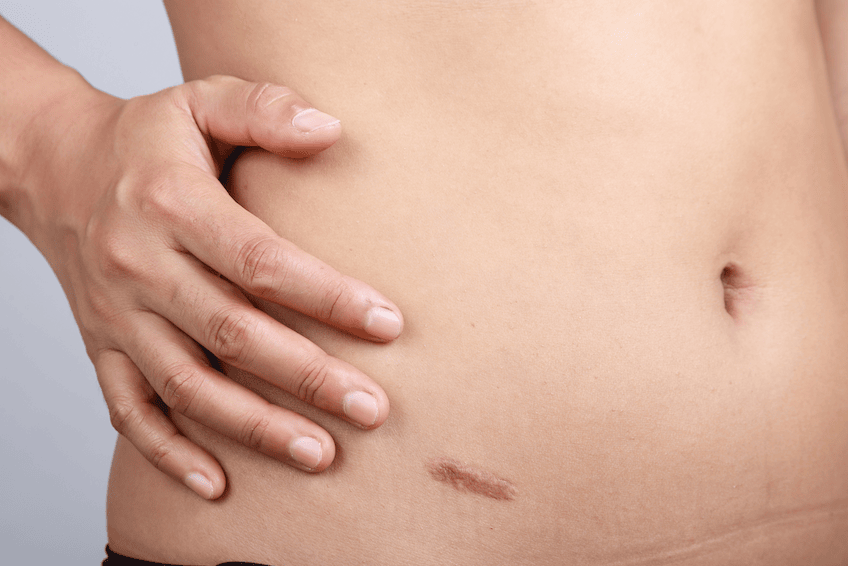
After working to release those restrictions using ScarWork and Visceral Manipulation, the pulling in her back resolved and the pain went.
Most importantly, it hasn’t returned.
So how could a tiny scar from a childhood operation have anything to do with her lower back?
A scar is more than the line you can see on the skin
When most of us think about a scar, we think about the part we can see. Once that line has healed, faded and stopped causing any obvious problems, it is very easy to assume that the story has ended there.
But surgery doesn’t only affect the surface of the body.
To reach an appendix, gallbladder, uterus or any other structure inside the abdomen, surgeons have to pass through different layers of tissue. Those tissues then need to repair themselves afterwards, and scar tissue is part of that healing process.
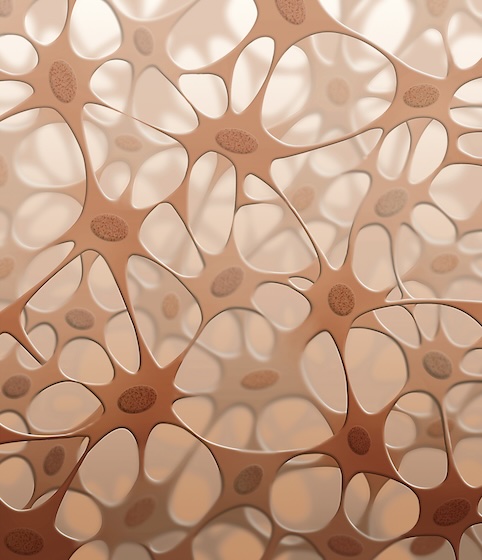
Scar tissue has different properties from the tissue that was there before. It tends to be less flexible and elastic, and adhesions can also develop where layers that would normally slide and glide easily against each other become more restricted.
This is particularly worth remembering with keyhole surgery. The scars on the skin may be tiny, but there may have been several access points for cameras and instruments, all passing through the abdominal wall to reach the area being treated. The surgery itself may also have involved removing an organ, repairing tissue or making other changes internally.
So the size of the scar you can see on the outside doesn’t necessarily reflect what has happened underneath it.
Our tissues need to move all the time. Not just when we bend, stretch or exercise, but when we breathe, walk, digest food, turn over in bed or simply move through everyday life. Where scars and adhesions create restriction, they can affect how freely the surrounding tissues are able to move.
If an area has become tighter or less mobile following surgery, the rest of the body may need to adapt around it.
How can an old scar contribute to back pain?
Our bodies are incredibly good at adapting. If one area isn’t moving quite as freely as it used to, you don’t necessarily notice it immediately. Your body simply finds another way to move.
That might mean a very small change in the way you rotate through your pelvis, how much movement comes from your lower back, the way you use your hips or even how your ribcage moves as you breathe. Most of those adaptations happen without you being consciously aware of them.
Initially that may not cause any problem at all. But when one area has less movement available, somewhere else may gradually have to do a little more. Over months and years, those small compensations can create extra load through other parts of the body.
You can think of it a little like fabric that has caught slightly in one place. The restriction may start in one small area, but when you pull or move the fabric, the tension can be felt somewhere completely different.
The body can behave in a similar way. A restriction around a scar may alter how easily tissues move in one area, and the body then adapts around it.
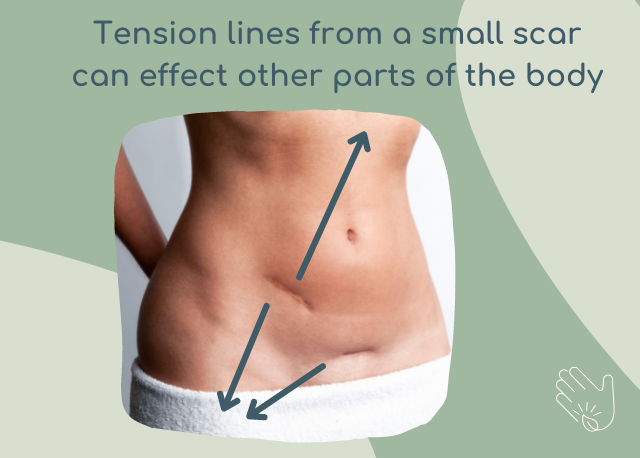
That also helps explain why an old scar can sometimes become relevant decades after the original surgery. It isn’t necessarily that the scar has suddenly changed. The body may simply have compensated very successfully for years.
But bodies change. We get older, our activity levels change, we have other injuries or operations, and we may gradually lose movement or strength in other areas. Eventually there can be less capacity available to compensate.
So that’s why an operation that happened 20, 30 or 40 years ago can sometimes still be relevant to a seemingly unrelated pain you’re experiencing today. The age of a scar doesn’t automatically rule it out as something worth considering.
Your body today is still living with the physical changes created by surgery years ago.
So what did this mean for my client?
In my client’s case, the small appendix scar and the restrictions underneath it were affecting the movement available through her abdomen, pelvis and lower back.
This is also where it helps to remember that the abdomen isn’t just a hollow space with the digestive organs floating around inside it. Those ‘vital’ internal organs are supported and connected through layers of fascia and connective tissue, many of which have relationships with the structures towards the front of the spine and the back wall of the abdomen.
The body needs these tissues and structures to be able to move in relation to one another. As we breathe, bend, stretch and twist, there should be a degree of movement and glide available throughout the area.

Where scar tissue and adhesions reduce that movement, the body may start making small adjustments elsewhere to accommodate the restriction and maintain the movement the tissues and organs within the area need. That can mean increasing tension through certain muscles or reducing the movement available through particular joints.
For my client, those adjustments had gradually reduced the amount of easy movement available through her lower back. She could manage perfectly well for most everyday activities, but when she bent and reached to pick something up, she needed more movement than was comfortably available.
That was when she felt the pain and pulling.
By releasing the restrictions around the scar and improving the movement through those tissues, we weren’t simply treating the place where she felt the pain. We were working with something that was contributing to why her back was under extra strain in the first place.
Could a surgical scar be the missing piece in your back pain?
Of course, this doesn’t mean that every scar causes back pain, and having had surgery in the past certainly doesn’t mean it is responsible for whatever symptoms you are experiencing now.
Back pain can have many causes and new, severe or unexplained pain should always be appropriately assessed.
However, if you have chronic or recurring back pain that nobody has quite got to the bottom of, it can be worth looking beyond the part of the body that hurts.
Perhaps you have repeated treatment on your lower back and it improves for a while, only for the same problem to return. Perhaps you have worked on your strength, posture and mobility but still have the sense that something is being missed.
If you have also had surgery in the past, whether that was an appendix removal, C-section, hysterectomy, gallbladder surgery, hernia repair, spinal surgery or even a seemingly minor keyhole procedure, it may be worth considering the scar as another part of the puzzle.
It doesn’t necessarily matter if the surgery happened last year or 40 years ago.
Sometimes what looks like a very small and insignificant scar on the outside can have a much bigger story underneath.
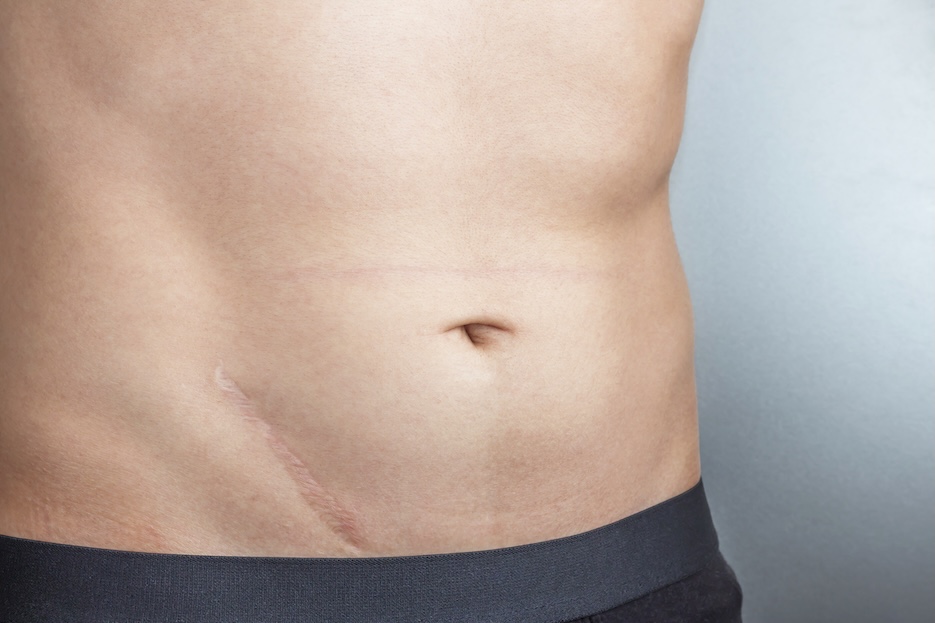
Want to know more about scars and ScarWork?
At Sittingwell®, we spend a lot of time talking about supporting your back well when you sit, but as therapists we also know that back pain is rarely as simple as looking at one joint, one muscle or one area of the body.
Understanding why your body is under strain in the first place can be just as important.
If you have had surgery and are wondering whether an old scar or internal restrictions could be contributing to a problem you are experiencing, you can find much more information about scars, keyhole surgery and ScarWork over on our clinic website, It’s All About Health.
There you can also learn more about how ScarWork works and when it may be appropriate.
Find out more about ScarWork and the hidden impact of scars at It’s All About Health.